Nevada inmate search is a public lookup system that helps people locate individuals held in Nevada state prisons and county jails. This system is run by the Nevada Department of Corrections (NDOC) and local sheriff’s offices across the state. A Nevada inmate search can show custody status, current facility location, charges, and projected release dates for personal knowledge.
The records shown through a Nevada inmate search come directly from official government databases. These records display names, identification numbers, sentencing details, and parole eligibility. Anyone can perform a Nevada inmate search at no cost using the NDOC website or county sheriff portals. The data is refreshed on a regular schedule to keep it current and accurate for the public.
How to Use the NDOC Inmate Search URL
The Nevada Department of Corrections (NDOC) runs an official online tool for the public to view limited inmate data. This tool is part of the Nevada Court Records portal and can also support users who are conducting a Nevada Court Lookup while searching for publicly available case-related information. It is meant for personal use only and cannot be used for commercial activities or any purpose covered by the Fair Credit Reporting Act (FCRA), such as employment background checks, tenant screening, credit decisions, or insurance evaluations. All records come from public sources and should be used responsibly.
Steps to Access the NDOC Inmate Search
The NDOC inmate search tool gives quick access to publicly available inmate data. The following steps walk through the full process from opening the official site to reviewing detailed inmate records. First-time users can follow these steps to move through the system with ease.
Open the Official NDOC Search Page
- Open a secure web browser such as Chrome, Edge, or Firefox.
- Type https://ofdsearch.doc.nv.gov/form.php into the address bar.
- Wait for the inmate search form to load on the screen.
Understand the Search Form
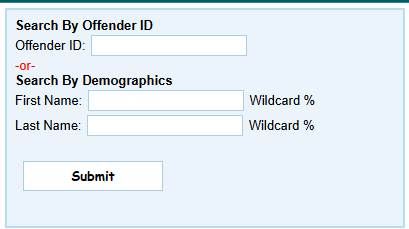
The form lets users search using different types of data:
- NDOC Offender ID – The most accurate way to locate a specific inmate.
- First and Last Name – Used when the ID number is not known.
- Date of Birth – Optional, but helpful for narrowing down results.
Enter Search Details
All data entered must be accurate and complete. A small typo in a name or an incorrect date of birth can stop the system from matching the right inmate. When the spelling is unclear, partial names or blank optional fields can return more results.
Search by NDOC Offender ID
- Enter the inmate’s NDOC number in the Offender ID field.
- This is the fastest and most precise way to pull up a single record.
Search by Name
- Enter the inmate’s first and last name in the correct fields.
- If multiple matches appear, add the date of birth to narrow the list.
Submit the Search
- Click the Submit button on the form.
- The system will load a list of matching records on the screen.
Review Search Results
- Look over the list to pick the correct inmate.
- Click the inmate’s name or record link to view full details.
View Inmate Details
The detailed profile normally shows the following data:
- Full legal name and NDOC ID number
- Photograph or mugshot when available
- Current facility and housing location
- Custody status such as incarcerated, transferred, or released
- Offenses and charges on file
- Sentencing data such as term length and sentencing date
- Estimated release date or parole eligibility
Types of Facilities in Nevada
A Nevada inmate search covers different types of correctional facilities across the state. These facilities vary by jurisdiction, purpose, and security level. The differences between state prisons, county jails, detention centers, and correctional institutions affect where people are held and how their records can be reached.
State Prisons vs. County Jails
State prisons in Nevada are managed by the NDOC and house people convicted of felony offenses who are serving long-term sentences. These facilities are built for post-sentencing incarceration and include structured programs for rehabilitation, education, and reintegration. Inmate records from state prisons can be reached through the official NDOC inmate locator. County jails are run by local sheriff’s departments, such as those in Clark County or Washoe County. They are used for short-term holding. People may be held in a county jail while waiting for trial, sentencing, or transfer to a state facility. These jails also hold people convicted of misdemeanors with short-term sentences. Because these facilities are county-managed, inmate data must be reached through the local county’s detention system or sheriff’s department website.
Detention Centers vs. Correctional Institutions
Detention centers and correctional institutions serve different roles in Nevada’s correctional system. Knowing the difference helps clarify the type of custody and the search methods available.
Detention Centers
- Built for temporary confinement and pretrial detention.
- Managed by local jurisdictions.
- Used to hold people shortly after arrest or pending initial court appearances.
- Lack long-term rehabilitation or correctional programming.
- Often called “jails” in county-level systems.
Correctional Institutions
- Built for long-term incarceration under state jurisdiction.
- Run by the NDOC and include secure housing for convicted people.
- Offer programs focused on education, vocational training, mental health services, and rehabilitation.
- Hold people already sentenced under the state legal system.
Facility Security Levels: Minimum, Medium, and Maximum
Nevada correctional facilities are classified by security level. The level decides the amount of control, supervision, and movement allowed within the institution. These levels play a key role in housing assignment and daily routine.
- Minimum-Security Facilities: Built for low-risk inmates, often those close to release or taking part in work programs. These facilities have fewer physical barriers and more freedom of movement.
- Medium-Security Facilities: Built for inmates who need a moderate level of supervision. These facilities include secure perimeters, controlled movement schedules, and dormitory-style housing.
- Maximum-Security Facilities: Reserved for high-risk inmates or those convicted of violent crimes. These institutions feature high walls, limited inmate movement, and constant surveillance to maintain tight control.
These levels help clarify the environment an inmate is placed in, along with their eligibility for visitations, programs, and supervised release.
Searching for Inmates in County Jails
Looking for an individual held in a Nevada county jail requires a different approach than locating someone in state prison. The NDOC manages inmates in state-run facilities, but each county sheriff’s department runs its own jail system. For users who are trying to locate someone shortly after an arrest, an Arrest Records Search can also provide helpful information before inmate records are fully updated. These jails hold people awaiting trial or serving short sentences. Knowing the difference between county and state systems is key to performing a complete Nevada inm
How to Locate Inmates Through County Sheriff Offices
To start a county-level inmate search, access the official sheriff’s office website for the relevant Nevada county. These local agencies often provide searchable online databases or clear instructions for requesting inmate data.
- Clark County Detention Center (Las Vegas): The Clark County Sheriff’s Office provides an online inmate search tool on their official website. Users can search by name, booking number, or date of birth.
(Website: https://www.clarkcountynv.gov) - Washoe County Detention Facility (Reno): Washoe County’s Sheriff’s Office provides a dedicated portal where users can view arrest records and current bookings.
(Website: https://www.washoesheriff.com) - Other Counties (e.g., Elko, Nye, Carson City): Smaller counties may not have searchable online systems, but many offer inmate lookup options via phone or in-person inquiry.
County-Specific Portals and Access Instructions
When online searches are not available, most counties allow data requests through official communication methods:
- Phone Inquiries: Call the detention center or sheriff’s office directly. Provide identifying details like full name and birth date to receive basic custody status or booking data.
- In-Person Requests: Visit the sheriff’s department or county jail in person during regular office hours. Bring identification and specify the request clearly.
- Mail Requests: Some counties accept written requests for inmate data. These may take longer to process and often require a fee for printed records.
How to Request Physical Inmate Records in Nevada
Requesting physical inmate records in Nevada is a legally governed process. It is built to provide transparency while protecting individual privacy. These records are kept by the NDOC and local county sheriff’s offices. They can be requested by members of the public under the Nevada Public Records Act (NRS Chapter 239). Under this law, citizens can obtain non-confidential inmate data for personal use. These records cannot be used for commercial activities, background checks, employment screening, tenant evaluation, insurance assessments, or any other purpose prohibited by the FCRA. Use of this data must remain strictly non-commercial and non-evaluative.
Official Methods to File a Public Records Request
To obtain physical copies of inmate records in Nevada, individuals can submit a request through one of the following official channels:
Online Requests
Many correctional agencies, including the NDOC, offer digital request portals or accept emails for records inquiries. When submitting an online request:
- Provide the inmate’s full name and identification number when available.
- Clearly specify the records being requested.
- Include your name and valid contact details.
A clear and precise request helps agencies locate the right paperwork quickly.
Mail Requests
A formal written request can be sent through the mail. The letter should include:
- Your full name and return address.
- The inmate’s name and identifying details.
- A clear description of the documents being requested.
- A note showing the request is made for personal informational purposes.
Send the request to the relevant correctional facility, at the state or county level. Always verify the current mailing address on the official agency website before sending.
In-Person Requests
In some cases, inmate records can be requested at the facility by visiting the administrative or records office. When making an in-person request:
- Bring valid identification.
- Confirm business hours and request procedures ahead of time.
- Prepare a written request or fill out a form provided at the facility.
Agencies may have policies on on-site requests, including limits on record access or copying.
Fees and Processing Times
Agencies may charge fees to process physical records requests under NRS 239.052. These fees typically cover:
- Photocopying or printing costs.
- Postage and delivery for mailed copies.
- Clerical time when applicable.
Fee schedules vary by agency and are usually posted on their websites. Requests are normally processed within:
- 5 to 10 business days for standard requests.
- Longer timeframes for complex or voluminous records, redactions, or third-party reviews.
Most agencies accept payments by check, money order, or other officially approved methods. When payment is needed, the agency will typically send an invoice before releasing the records.
Important Legal Considerations and Restrictions
Inmate records are public under Nevada law, but certain limits apply:
- Records involving juveniles, sealed cases, or confidential investigations are excluded from disclosure.
- Data obtained cannot be used for credit, employment, housing, insurance, or licensing decisions. This is prohibited by federal regulations under the FCRA.
- These records may not be sold, resold, or repurposed for commercial advertising or marketing.
All use must remain personal and non-commercial. Misuse of public inmate data can lead to legal consequences under state and federal law.
Privacy, Limitations, and Legal Restrictions
Access to inmate records in Nevada is subject to clear privacy standards and legal restrictions. Some inmate data is publicly available under Nevada law, but the extent and use of that data are governed by specific regulations built to protect individual rights. This section covers who can access inmate records, the limits on juvenile and sealed records, and the lawful scope of data use.
Who Can Access Nevada Inmate Information
Public inmate data in Nevada can be reached through the NDOC or local sheriff department portals. These records may include:
- Full name of the inmate.
- Current custody or housing status.
- Inmate location and identification number.
- Nature of criminal charges.
- Sentence length and parole eligibility.
Access does not extend to all data. Medical records, mental health evaluations, disciplinary records, and victim-related details are generally restricted. They are only made available to authorized personnel, including legal representatives or law enforcement agencies with proper jurisdiction.
Confidentiality of Juvenile Records and Sealed Convictions
Juvenile inmate records are strictly confidential under Nevada law. These records are not included in public searches. They are only available to authorized individuals, such as legal guardians, attorneys of record, or court-approved officials. This restriction matches the juvenile justice system’s rehabilitative purpose. Sealed or expunged records are legally treated as non-existent. Once sealed by court order, these records are removed from public view and cannot lawfully be disclosed or used. Unauthorized access or distribution of such records may lead to legal penalties. Users must refrain from attempting to retrieve sealed data through any third-party or public database.
Legal Use of Inmate Data: Personal Use Only
All inmate data obtained must be used solely for personal, non-commercial purposes. Use of this data is strictly limited by state and federal law, particularly the Fair Credit Reporting Act (FCRA) and PeopleConnect’s Terms of Use. This means the data:
- Cannot be used for employment background checks.
- Cannot be used for tenant or lease screenings.
- Cannot be used for credit, insurance, or loan decisions.
- Cannot be used to determine eligibility for licenses, benefits, or child or spousal support.
- Cannot be sold, brokered, or reused in any commercial or business setting.
The provider of this content does not operate as a Consumer Reporting Agency (CRA) under the FCRA. None of the data presented may be used in any context that would require CRA compliance. Misuse of this data could result in civil and legal liability.
Truthful Advertising and Data Representation
All references to public inmate data must comply with FTC Section 5 guidelines on advertising and representations. This means:
- Claims must not be deceptive or misleading.
- Data must be substantiated with objective sources.
- Language must not imply exclusive, hidden, or private access.
- Terms like “retrieve criminal records” must be replaced with compliant alternatives like “discover if records are available.”
- Use of the term “free” is prohibited unless the offering is entirely without cost and disclosed clearly.
This site does not guarantee the completeness, availability, or accuracy of any inmate record. All users are encouraged to verify records through official state-operated channels. Government sites, such as the NDOC inmate search tool or local county sheriff’s portals, remain the most reliable and updated sources.
How Often Is Nevada Inmate Data Updated?
Accurate inmate data is key to making sure public records reflect the most current custodial details. In Nevada, both the Department of Corrections and local sheriff’s offices run inmate databases. Each agency follows its own update schedule. Knowing these timelines helps users interpret inmate search results, especially when verifying personal data for lawful, non-commercial use.
Update Frequency by Nevada Department of Corrections (NDOC)
The NDOC works to keep timely and accurate records across its inmate search platform. In most cases, the online system is refreshed daily, especially for active inmates housed in state facilities. These updates typically include changes in inmate location, custody status, sentence details, and release eligibility. Occasional maintenance windows, processing delays, or staffing bottlenecks may temporarily impact the immediacy of these updates. The NDOC prioritizes real-time accuracy, but some records may reflect data that is several hours or, in rare cases, days outdated.
County Sheriff’s Office and Jail System Update Cycles
Each county in Nevada runs its own jail system under the supervision of the local sheriff’s department. These departments may follow different data refresh cycles depending on internal workflows and available resources.
- Clark County Detention Center may update its inmate roster multiple times daily.
- Smaller counties might refresh their listings only once per day, typically during overnight hours.
No centralized standard exists for jail data updates, so record availability and accuracy can vary by jurisdiction. Users should always check the official website of the relevant sheriff’s office or contact the administrative department to verify the most recent update time.
Known Data Lags and Synchronization Delays
Beyond agency-specific update schedules, inherent delays can affect the currency of inmate records:
- Technical processing queues may delay the publishing of booking or release data.
- Inmate transfers between county and state facilities can create brief inconsistencies when the transfer has happened but has not yet been recorded across all platforms.
- Discrepancies between NDOC and local jail data may occur when systems are not synchronized in real time.
Such delays are usually short-lived but show the value of checking multiple sources when exact timing is critical.
Why Double-Checking Time-Sensitive Data Matters
When seeking inmate data for personal awareness, peace of mind, or to confirm a recent event such as an arrest, release, or facility transfer, verifying the data through official NDOC or sheriff’s office communication channels is strongly recommended.
- All inmate records are intended strictly for personal use and must not be used for employment, housing, credit, insurance, or other purposes governed by the FCRA.
- Data is subject to change without notice. Any records accessed should be treated as a snapshot in time, not a real-time reflection of custody status.
- Third-party data aggregators may not update as frequently as official sources, which can lead to the display of outdated or incomplete data.
Rechecking the records, especially when they relate to time-sensitive decisions or events, helps make sure the data being viewed is as current and accurate as possible.
Contact Info
When conducting a Nevada inmate search, official government sources should always be used. Below is a quick-access table with verified contact data for state, county, and federal inmate search systems. Use this data for personal use only, not for employment, housing, or business screening, as restricted under the FCRA.
Nevada Inmate Search Contact Table
| Agency | Type | Phone Number | Website | Notes |
|---|---|---|---|---|
| Nevada Department of Corrections (NDOC) | State Prisons | (775) 977-5500 | doc.nv.gov | Use NDOC portal to search by name or ID |
| Clark County Detention Center | County Jail | (702) 671-3900 | clarkcountynv.gov | Las Vegas detainee lookups |
| Washoe County Jail | County Jail | (775) 328-2971 | washoesheriff.com | Reno-based inmate data |
| Elko County Jail | County Jail | (775) 738-3421 | elkocountynv.net | Local jail records |
| Nye County Detention Center | County Jail | (775) 751-7027 | nyecountynv.gov | County-level detainee data |
| Federal Bureau of Prisons (BOP) | Federal Prisons | (202) 307-3198 | bop.gov/inmateloc | For federal inmate locator |
NDOC Address: 5500 Snyder Avenue, Carson City, NV 89701
NDOC Phone: (775) 977-5500
NDOC Website: doc.nv.gov
NDOC Inmate Search Portal: https://ofdsearch.doc.nv.gov/form.php
Visiting Hours: Saturday and Sunday, 8:00 a.m. to 3:00 p.m. (varies by facility)
Frequently Asked Questions
The following questions cover common concerns about Nevada inmate search tools, records, and legal limits. Each answer is written to help readers make smart, lawful use of public inmate data. Personal use is the only permitted purpose under state and federal law.
How do I run a Nevada inmate search by name?
To run a Nevada inmate search by name, visit the official NDOC portal at https://ofdsearch.doc.nv.gov/form.php. Enter the inmate’s first and last name in the correct fields. If multiple matches appear, add the date of birth to narrow the list. The system returns a list of matching records pulled from the NDOC database. Click the correct record to view full details such as facility location, charges, and release date. This method is free, public, and meant for personal use only. Use of the data for employment, housing, credit, or insurance decisions is prohibited by the FCRA.
Can I look up an inmate in a Nevada county jail online?
Yes, many Nevada county jails offer online lookup tools. Clark County Detention Center in Las Vegas and Washoe County Jail in Reno both run online inmate search portals. Users can search by name, booking number, or date of birth. Smaller counties may not have online tools, so phone or in-person requests are the next step. Always confirm the data through the official county sheriff’s website, since third-party sites may carry outdated or incomplete records. County jail data covers people awaiting trial, serving short sentences, or pending transfer to a state facility.
What data does a Nevada inmate search record show?
A Nevada inmate search record shows the inmate’s full legal name, NDOC number, photograph or mugshot (when available), current facility, housing location, custody status, offenses on file, sentencing details, and projected release or parole eligibility. Restricted data, including medical history, mental health evaluations, and victim details, is not available to the public. Records reflect a snapshot in time and may not update in real time. Always check the official NDOC or county sheriff portal for the most accurate data before drawing any conclusions.
Is the Nevada inmate search tool free to use?
Yes, the NDOC inmate search tool and most county sheriff portals are free for public use. No payment is needed to view basic inmate data. Some agencies may charge a small fee for printed copies of records or certified documents, in line with NRS 239.052. The free service is meant for personal use only. Charging others, reselling data, or using the records for commercial screening is prohibited by the FCRA and the NDOC’s terms of use.
How often does the NDOC update inmate records?
The NDOC updates inmate records daily in most cases, with changes to location, custody status, and sentence details refreshed each business day. County jail systems follow their own cycles, with some refreshing data multiple times per day and others only once. Maintenance windows, processing queues, and transfer delays can create brief gaps in the data. Users who need exact timing for personal awareness should verify with the NDOC or local sheriff’s office directly.
Can juvenile records be searched in Nevada?
No, juvenile inmate records in Nevada are strictly confidential. They are not part of any public inmate search tool. Only authorized individuals, such as legal guardians, attorneys of record, or court-approved officials, can view juvenile records. Sealed or expunged records are also treated as non-existent and cannot be reached through public databases. Any attempt to retrieve sealed data through unofficial channels may lead to legal penalties under state and federal law.
What should I do if the NDOC search returns no results?
When the NDOC search returns no results, the person may be held in a county jail rather than a state prison. Check the relevant county sheriff’s website, such as Clark County or Washoe County. A typo in the name, an incorrect date of birth, or a recent transfer can also cause a no-match result. Try partial name searches or leave optional fields blank. When the person is still not located, contact the NDOC or local sheriff’s office by phone for help. Always rely on official government sources, since third-party sites often carry outdated data.