Nevada civil court records are official documents that show how courts resolve non-criminal legal disputes in the state. These records cover cases about contracts, property, personal injury, family matters, and small claims. They include filings, motions, judgments, and hearing notes from the court where the case was heard. Anyone can look at most of these records because Nevada law supports public access to court files.
This page explains how to search for, request, correct, and pay for civil court records in Nevada. It also lists the types of civil cases, the courts that handle them, and common mistakes people make when filing record requests. All details below reflect current procedures used by the Nevada Judiciary and county clerk offices as of 2026.
How to Request Copies of Civil Court Records in Nevada
Requesting copies of Nevada civil court records requires a few clear steps. The state has no single database for all civil records, so users must work with the specific court that handled the case. The Nevada Judiciary website serves as the main starting point for all record requests, while Nevada Court Decisions can also help users understand the outcome of past civil cases before requesting official documents. Each county runs its own system, so court selection matters.
Identify the Correct Court
The first step in any record request is finding the right court. Nevada civil cases are filed in Justice Courts, District Courts, or Municipal Courts. The court depends on the case type and the dollar amount in dispute. Users can confirm the correct court by visiting and using the “Find a Court” tool. Choosing the wrong court leads to delays or rejected requests.
Search for the Civil Case Online
After picking the right court, the next step is to search for the case. The Nevada Courts website offers a case lookup tool that works for most counties.
Steps to search:
- Go to https://www.nvcourts.gov
- Click “How Do I”
- Select “Find a Case”
- Pick the county court
- Enter search details
Search options include:
- Case Number (most accurate method)
- Party Name (enter last name first)
- Filing date range (if available)
Always double-check spelling and avoid middle names unless required. A small typo can return no results.
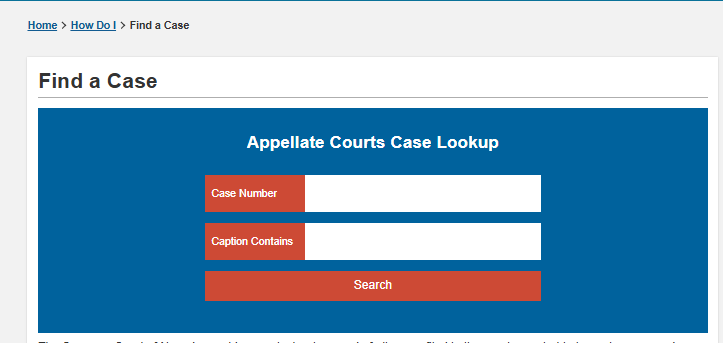
Appellate Courts Case Lookup
For civil cases that went on appeal, the Nevada Courts website has a separate lookup tool. This tool covers cases heard by the Supreme Court of Nevada and the Court of Appeals. Users can search by case number or case caption. It does not cover district-level cases. If a civil case was appealed after a lower court ruling, it may appear in this database.
Choose Your Record Request Method
Once the case is located, users can request copies online or in person. The method depends on the county.
Online request process:
- Open the case details page
- Look for copy or document request links
- Pick certified or non-certified copies
- Pay the fee
- Submit the request
In-person request process:
- Visit the Clerk’s Office
- Fill out a civil records request form
- Provide the case number
- Pay the fee
- Get copies
Some courts require a photo ID for certified copies.
Pay Required Fees
Nevada courts charge fees for record copies. Fees vary by county and depend on the type of copy requested.
Payment methods include:
- Cash (in person)
- Credit or debit card
- Certified check
- Money order
Fees are non-refundable once the court starts processing the request.
Processing Times and Delivery
Processing time depends on the court, the request method, and the file status.
Average timeframes:
- Online requests: 1 to 5 business days
- In-person requests: same day or 1 to 3 business days
- Mail requests: 5 to 10 business days plus transit time
Sealed or archived records need court approval before release, which adds time.
Types of Civil Cases in Nevada
Nevada civil courts handle disputes that do not involve criminal charges. These cases come up when people or businesses need a court to settle disagreements over money, property, contracts, or family issues. Below are the main categories of civil cases filed in Nevada courts.
Contract Disputes
Contract disputes happen when one or more parties disagree over a written or spoken agreement. Courts decide if the contract is valid and if any terms were broken.
Common contract disputes include:
- Unpaid loans or promissory notes
- Lease or rental disagreements
- Construction or contractor issues
- Business service or purchase breaches
- Non-delivery of goods or services
Personal Injury and Tort Claims
Tort claims cover wrongful acts that cause harm to another person. Most personal injury cases in Nevada seek money for the harm done.
Common tort filings include:
- Car and vehicle accidents
- Slip and fall injuries
- Defamation or libel claims
- Medical malpractice
- Civil assault or emotional distress claims
Property and Landlord-Tenant Disputes
Property disputes cover land use, damage, and ownership. Nevada courts also handle landlord-tenant conflicts.
Typical issues in these cases:
- Property boundary disputes
- Tenant evictions
- Property damage claims
- Security deposit return issues
- Unsafe housing complaints
Probate and Estate Cases
Probate courts in Nevada handle the legal process after someone dies. They manage the estate and settle debts.
Probate cases may include:
- Will contests
- Estate executor appointments
- Property distribution to heirs
- Creditor claims against the estate
- Guardianship petitions for minors or adults
Small Claims Court Cases
Small claims court handles simple disputes over smaller amounts of money. People can file these cases without a lawyer.
Common small claims issues:
- Unpaid rent, wages, or small debts
- Property damage
- Simple contract breaches
- Return of personal items or deposits
- Misrepresentation in personal deals
Family-Related Civil Filings
Family law matters go through Nevada civil courts in family divisions. These cases involve personal relationships but no criminal conduct.
Examples include:
- Divorce and legal separation
- Child custody and visitation
- Child and spousal support
- Adoption or parental rights termination
- Civil protection orders
Where Civil Court Cases Are Filed in Nevada
Nevada civil cases are filed in two main types of trial courts: Justice Courts and District Courts. Each court handles different cases based on the amount of money and the legal issue. Understanding the court system and using the appropriate Records Search process helps users find case information more efficiently. Knowing the right court saves time and avoids error
Justice Courts
Justice Courts handle smaller civil disputes. They have limited power and can only hear certain cases.
Justice Courts handle:
- Claims up to $10,000 (small claims)
- Evictions and landlord-tenant issues
- Temporary protective orders in certain cases
Justice Courts sit in each county and use simple rules. Many people file cases here without a lawyer.
District Courts
District Courts have full power over most civil cases. They handle larger and more complex matters.
District Courts handle:
- Claims over $10,000
- Injunctions and declaratory judgments
- Civil appeals from Justice Courts
- Business, contract, and tort disputes
- Permanent restraining orders
District Courts also handle jury trials in civil cases when requested.
Jurisdictional Breakdown by Amount of Claim
The dollar amount is the main factor that decides which court hears a case.
| Court Type | Monetary Limit | Case Examples |
|---|---|---|
| Small Claims (Justice Court) | Up to $10,000 | Security deposit issues, consumer complaints |
| Justice Court | Up to $15,000 civil matters | Landlord-tenant cases, minor contract issues |
| District Court | Over $15,000 and equitable claims | Personal injury, property disputes, defamation |
This setup keeps small disputes at the local level and sends bigger cases to District Court.
Fees and Costs for Access Civil Court Records
Courts in Nevada charge set fees for civil record copies. Costs vary by county and by the type of copy. Always check the clerk’s office in the right county for the most current prices.
Standard Document Request Fees
Most courts charge a small fee for general copies. These fees cover the cost of searching, copying, and staff time. Per-page fees usually run $0.50 to $1.00. Larger files cost more. Most courts ask for a case number or enough detail to find the file.
Certified Copy Charges
Certified copies carry an official court stamp and signature. They are often needed for legal, business, or immigration use. Certification costs an extra flat fee, usually $3.00 to $6.00 per document, on top of per-page copy fees. Final judgments and orders may cost more due to extra handling.
Fee Waiver Options
Nevada courts offer fee waivers for people with low income. A “Request to Waive Filing Fees and Costs” form lets people ask for free or reduced-cost records. The court reviews income, financial hardship, and supporting documents like pay stubs or benefit letters. Approval depends on the judge.
To apply for a waiver:
- Contact the clerk’s office or visit the county court website
- Fill out the waiver form and attach proof of income
- Submit the form before the record request is processed
Not all requests qualify for a waiver.
Issues and Mistakes When Requesting Civil Records
People often run into problems when they ask for civil court records. Most issues come from small errors or a lack of knowledge about how the courts work. The list below covers the most common mistakes and how to avoid them.
Errors in Case Numbers or Party Names
Typing a wrong case number or misspelling a name is the most common reason for failed searches. Nevada courts need exact details to pull a file. A transposed digit or a wrong letter can lead to no results.
To avoid this mistake:
- Check the case number format for the county
- Confirm the full legal name, including middle initials
- Use original court papers as a reference
Public access does not mean automatic matching. Errors may lead to rejected requests.
Delays Due to Incomplete Forms
Many counties require formal request forms. Missing fields, unsigned lines, or no payment cause delays. Some forms need notarization.
Common missing items include:
- Filing dates or case details
- Authorization checkboxes
- Payment for copy fees
Before sending any form, check all fields. For mail requests, make sure signatures and payment meet court rules.
Requesting Records from the Wrong Jurisdiction
Civil cases stay with the court that handled them. A common mistake is sending a request to the wrong county. For example, a Las Vegas case cannot be requested from a rural county clerk.
To avoid this error:
- Confirm which court handled the case
- Find the county where the dispute took place
- Call the clerk’s office if unsure
Wrong requests may cause delays and non-refundable fees.
How to Verify the Status of a Pending Request
Not all courts send automatic updates. Some have no online tracking. Without follow-up, users may miss deadlines.
To stay informed:
- Keep the receipt or confirmation number
- Follow up with the clerk using the contact info on the court website
- Save copies of all forms and emails
Larger counties like Clark and Washoe may take longer to process certified copy requests.
How to Correct or Amend Civil Court Records in Nevada
Errors in civil court records can cause problems in legal cases or background checks. Nevada has a clear process for fixing wrong or outdated data. The steps depend on the type of error and the court that holds the record.
Steps to Fix Clerical or Factual Errors
The first step is to spot the error. Common issues include wrong names, dates, or case numbers. Clerical errors like typos can often be fixed by the court without a hearing. Factual disputes may need a formal motion and a court hearing.
Start by reviewing the case docket and filed documents. After confirming the error, contact the clerk’s office at the court where the case was filed. Submit a written request that describes the error, provides proof, and asks for a correction.
Supporting Documents Required
Courts need proof before they change a record. Required documents may include:
- A copy of the record that shows the error
- A government ID for name-related fixes
- Legal papers that show the correct data, like birth certificates or contracts
- A sworn affidavit that explains the mistake
Some counties may need extra forms. Always check the local rules before filing.
Where and How to Submit Correction Requests
Correction requests go to the court that holds the original record. There is no statewide correction portal. Users can submit requests in three ways:
- Visit the court in person and talk to a clerk
- Mail the request to the court address
- File a motion online (if the county offers e-filing)
Some corrections need a court hearing. If so, the court will send a notice with the date.
Additional Considerations
A few extra points to keep in mind:
- Some courts charge a fee for correction requests or new certified copies
- Correction time ranges from a few days to several weeks
- Sealed records need a court order before any change
- A lawyer can help with disputed or complex cases
Nevada Judiciary Contact Information
For help with civil court records, contact the Nevada Judiciary or your local county clerk. The main office details are below.
Nevada Supreme Court
201 South Carson Street
Carson City, NV 89701
Phone: (775) 684-1600
Website: https://www.nvcourts.gov
Hours: Monday to Friday, 8:00 AM to 5:00 PM
Frequently Asked Questions
The following questions cover common concerns about Nevada civil court records. Each answer reflects current rules and practices used by Nevada courts as of 2026. These answers are meant for general knowledge and should not replace legal advice.
What are Nevada civil court records?
Nevada civil court records are official files that show how courts handled non-criminal disputes. They include filings, motions, orders, and final judgments in cases about contracts, property, personal injury, family issues, and small claims. Each court keeps the records for cases filed in its jurisdiction. Most records are open to the public under state transparency laws, but some are sealed or restricted by court order.
How can someone check if a civil case was filed in Nevada?
To check if a civil case was filed, use the case lookup tool on the Nevada Courts website at https://www.nvcourts.gov. Pick the correct county, then search by case number, party name, or filing date. For older cases or counties without online tools, visit the courthouse or call the clerk’s office. Court staff can guide you through the search process and tell you what details you need.
What information is included in civil court records?
Civil court records list the names of the parties, the case number, the filing date, and a short description of the dispute. They also include key court documents like complaints, answers, motions, orders, and final judgments. Some files have exhibits or evidence. Certain sensitive details, like minor children’s names or financial account numbers, may be redacted or sealed by court order.
Are all Nevada civil court records open to the public?
Most Nevada civil court records are public, but some are restricted. Cases that involve minors, certain family matters, or protected personal data may be sealed. A judge can also seal parts of a record for privacy or safety reasons. When records are sealed, only people authorized by the court can see them. Public access depends on the case type and the judge’s decision.
Why do people search for Nevada civil court records?
People search for civil court records for many reasons. Lawyers use them for legal research. Businesses check them before signing contracts or deals. People look up records during divorce, custody, or property disputes. Journalists and researchers study them to track court trends. These records help the public see how courts handle disputes and promote trust in the legal system.
Can old or archived civil records be searched online?
Some old civil records are available online through county lookup tools, but many are only in physical archives. Archived files may take longer to retrieve and may cost more to copy. For very old cases, users often need to visit the courthouse in person or hire a record retrieval service. The clerk’s office can confirm what is available online for a specific year and case type.
How long does Nevada keep civil court records?
Nevada keeps civil court records based on state retention rules. Most civil case files are kept for at least 10 years after the final judgment. Some case types, like probate or property disputes, are kept longer. After the retention period, the court may archive or destroy the physical files. Digital records may stay available online even after the paper files are archived.